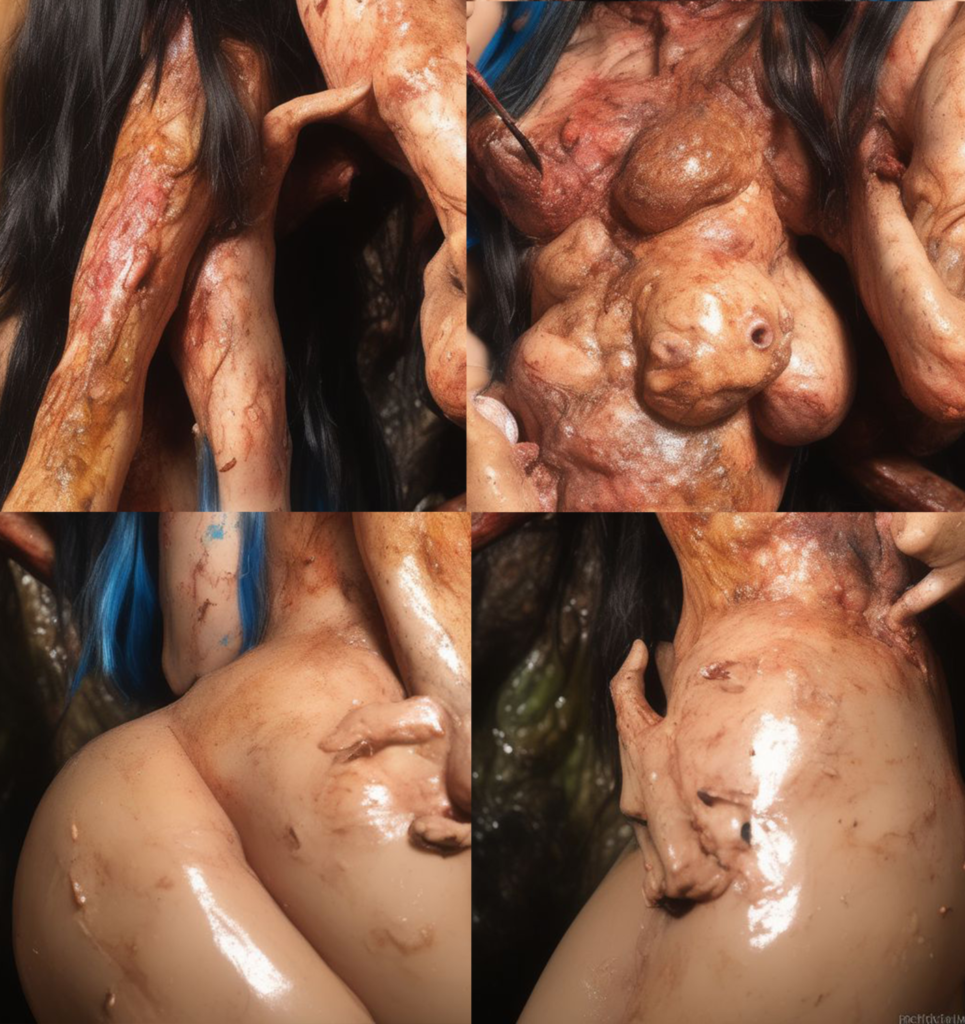
Part 2 of ‘Amputation’ by Louis Bourgeois. Read Part 1 here.”
I’m being slaughtered again: the hazard lights flash above the sky; they are putting me to death, yet again, I do not flinch.
The call for blood is immense—I can no longer see myself—the loss of self is more terrible than death—who put me here, and for what reason? Why was I poisoned such, and for whom was I poisoned? Caught the true emotions just once on the page, and now it haunts me wherever I go—these meager perspectives are misleading, and they somehow drag me closer the grave—if I could just get born, then perhaps all would be returned to me—
I write in green because I cannot write in red.
What was obvious is no longer so—I cannot face my blue mind anymore; my life has been nothing more but scattered notes—nothing more—everything is true and I comprehend my life like a religion, until I let my eyes slip from the page and everything returns to a horrible chaos in which I lose the sun and moon, two deities I’ve denounced at once, when I was healthy—but is one ever healthy or is that one more illusion in a sea of more illusions? An illusion within an illusion within an illusion within an illusion until nothing is left but trapped shadows of shadows. I do not want to believe this and, at the very least, I’d like to think my life is sacred, unique—but there’s a serpent wrapped around me that whispers otherwise, it says repeating itself always, un éclat, éclat, Dieu un éclat—but don’t believe him—
I denounce both the serpent and christ.
I am forever falling into the pit of normalcy—missing a whole limb changes your whole perception of what’s normal, or is it just the opposite? Missing two limbs drags you even further into despair that renders christ’s suffering absurd. I carry no comfort within me; I will live stretched out on the horizon until the ultimate Revolution begins, and then I will step down from my thrown, and all will be well again, equal.
Revolution and the Horizon and God are the same.
Plastic gods are just as real as flesh made gods—our century has not suffered adequately to realize the agony this has caused us—I shall lash out again and again until my name is on every tongue—my missing arm will remember this century and how far from reality it was.
I have not lost the taste for blood sacrifices—when I come to power, I shall have no mercy on the wicked, that is, the normal. Amputation will become like a blinding white light—we cripples being the lowest of the low will finally sprout wings and fly into tomorrow—the air is thin up here, it is hard to breath—no one has been able to speak to me since I went silent from an overabundance of Joy. I’ve lost all human sensibility—I must be free, utterly free, freer even than Alexander the Great and Diogenes the Dog—freer than christ when the last nail was pulled out of his flesh; to eat christ, to roast his god-meat on a stick—to see that I have always been here—to become fully aware how great I’ve become, how large—I fill the universe up with mass and time will flow backward—so distant I’ve become everything is so far away as it can be, so close, trembling. I am trembling, so full of light and darkness—sight purified by blindness, the blindness and gift and curse—the earth beneath my feet melting away the ions of complex dust an explosion of all forms—my name carved on the very heart of the Abyss—Sartre save me from my own darkness—language melting into tears, that are rivulets of fire—how I swirl in pride and death—anxiety of the highest order—they will take my limbs and scatter me again, I who have no love of disorder, they will scatter me again in order to make me more whole—betrayed by my own mind, I shall be left alone in the darkness again—silence and darkness forever—can I bear the Joy of such an existence?
Morning is the enemy here—it calls me back to the world of youth, that world that had the appearance of realization—I shall never have arms, they remain unlocked and abandoned.
The tears of the rejected are sacred—broken toys that only the most desperate would take home with her; she gave me a name again, not because she was kind, but because she was afraid of me; afraid that if I were left alone my poison would spread into the very cells of the young and beautiful—why didn’t they just put me to sleep? They are very strange the ones who rule, their humanity is really a strange cruelty—they keep us alive for their own amusement—those who rule us have created us—they never throw away even the most deranged and wretched deformed puppets—they are not kind to keep us alive like this, we are miserable—they keep us in a terrible state of hope, torment really, yet we shall rise one day and kill our owners, to show them that torture is real and that creation is too cruel a thing and upsets the natural order of nothingness—light, a contamination of the darkness.
The overthrow of everything will be the realization of universal peace and Hosanna will fall to Lucifer who in turn will restore the universe to its proper order of universal bliss and the nothingness of extreme blue—a blue so strong it becomes white.
Every Supernova is an event that proves Lord Lucifer has released certain molecules from the evil bondage of God—
They stick the hot iron deep into my anus just to see how I will respond. I don’t flinch, so they make hotter the iron and gouge out my eyes. They have made me blind again so that I’ll tell stories of the Abyss, the very Abyss they are in denial of—this account is the story of the Abyss, for which there is neither cause nor remedy, for which there is no story line.
Know. Emily was kept forever in the darkest room with me—they’d cut out her tongue so that she would be no comfort to me. When I had hands, I would have stroked her long red hair—they know all the tricks for keeping me warm, they know how to keep me absolutely free—they are the most kind at their harshest in this Land of Absolutes, only peace remains.
Louis Bourgeois was born in New Orleans. He is primarily a poet, and his translations, fiction, memoirs, poetry and interviews have appeared in over two hundred magazines and journals across North America, Europe and Asia. He was the first graduate of the University of Mississippi’s MFA program in Creative Writing.