The measuring tool for phenomena in religious systems is the unification of principle, attributing everything that has happened, is happening, or will happen to God. This approach does not deny God’s existence, but it denies human reason the ability to think objectively. The primary problem in religiously ideological societies is that individual or partisan decisions are transformed from subjective to objective. They then conclude that matters are left to fate and the power of God. They do not differentiate between personal and objective choice, but their interpretation is based on a single principle: the will of God.
Here, they deny human responsibility for the consequences of actions, as if God created angels or endowed them with divine attributes that enable them to make legitimate mistakes among us.
Their view of things is not natural, or perhaps this is simply how they want us to understand it. Compromise is impossible, even if they are the weaker party, and capabilities or losses cannot be measured because all of this is linked to the unseen. Our objection to gratuitous death becomes an objection directed against God himself, not against them as humans who possess the legitimacy to control a people and a land in a place on this earth. Their religious and doctrinal logic disregards tangible results on the ground, relying instead on a priesthood that imposes the authority of religious discourse, separating matters from reality.
They can detach events from human history and past occurrences because, as previously mentioned, the interpretation of phenomena and events is subject to the sole authority: God. Whether natural, social, or political, they attribute the interpretation to the religious (and political) figure, who supposedly understands God’s intentions behind all these events. This leads to the same human logic and natural laws that the religious figure does not rely on for justification. He uses religion for purposes of empowerment and political control. He considers himself and his group not ordinary people, but rather individuals possessing qualities and talents that enable them to have a broad and mystical understanding of matters. They have characteristics unlike those of ordinary people, which is why God uses them to carry out specific events. Herein lies the confusion: they make themselves divine instruments, subservient to God’s will, not to a fallible human will. This ideology has spread in Iran, Lebanon, Gaza, Yemen, and everywhere we see a region controlled by a single religious political party. It negates the human element of the ruler and bestows upon him divine attributes to create a legitimacy that ordinary people cannot strip away. This logic will only exacerbate conflicts and intensify suffering for the citizens of these countries. There is no turning back in the face of this existential struggle embraced by the proponents of the religious political system. Regardless of the losses and material costs, surrender or retreat will not be an option, “even for the last child” they will fight… as Yahya Sinwar, the architect of destruction in the Middle East and leader of Hamas in the Gaza Strip, has stated.
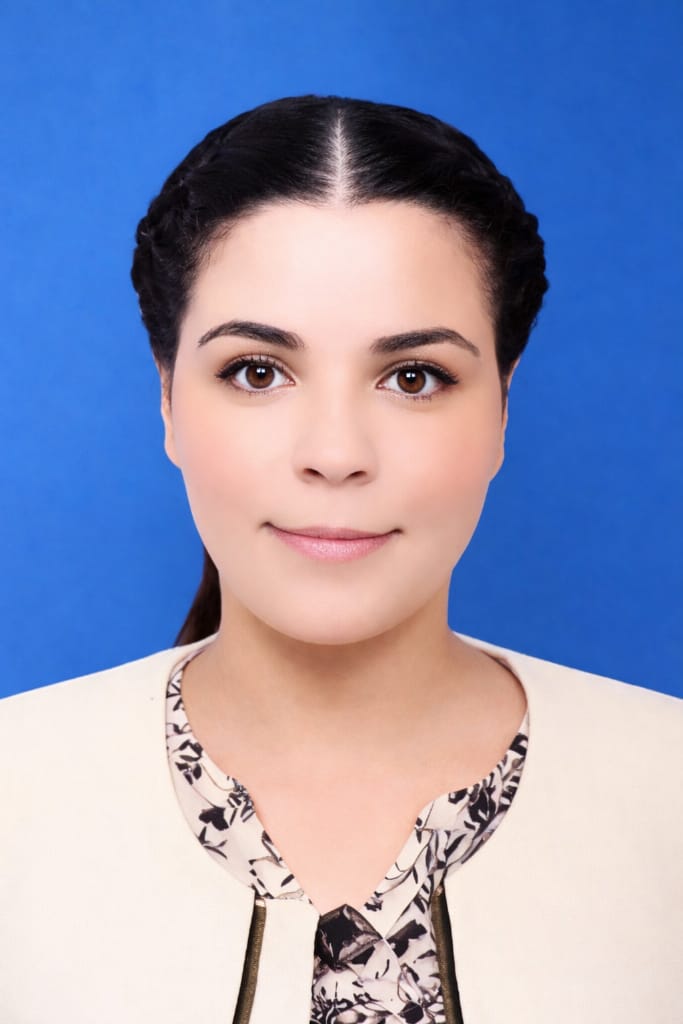
Rewaa Alkhozondar is a Palestinian writer and journalist from Gaza. She holds a master’s degree in journalism and communication from the Institute of Press and Information Sciences in Tunisia. Her work focuses on human rights, humanitarian, and political issues, and she maintains an open engagement with diverse cultures and societies.
She has lived in both Congo and Ethiopia, experiences that have further shaped her global perspective. Rewaa is a strong advocate for women’s issues and actively supports Palestinian women in challenging patriarchal mindsets within society.