The War Notes 4
1
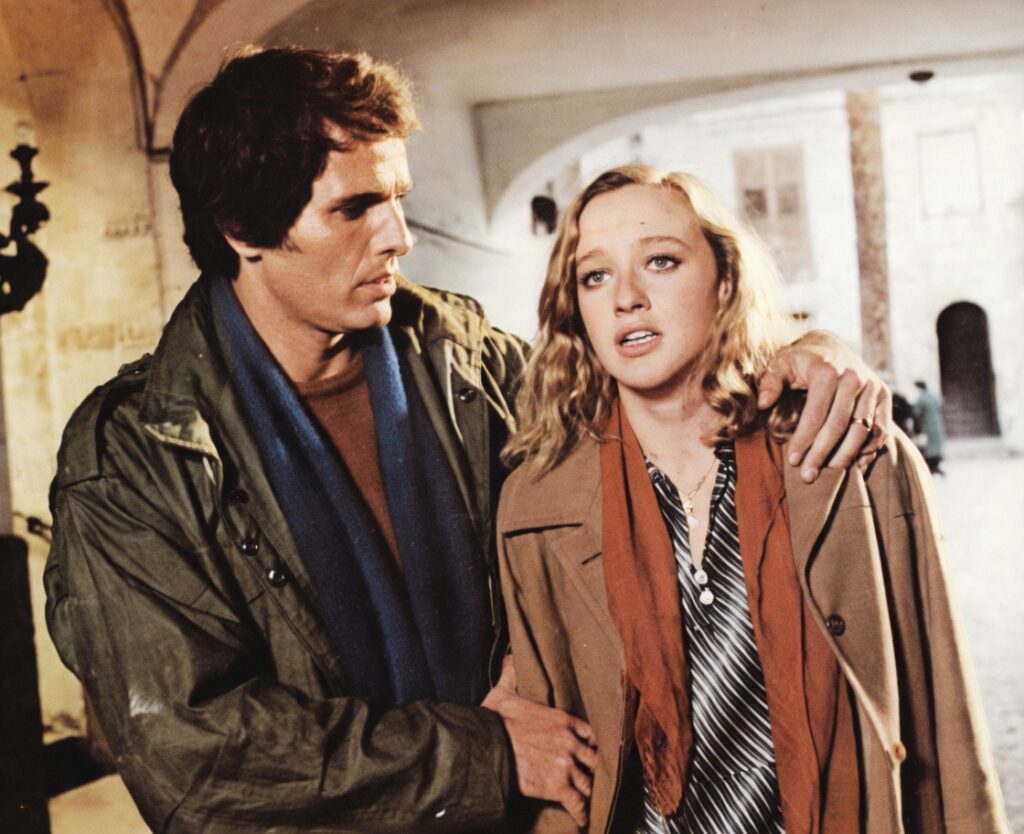
One of the most influential films I saw in my teenage years was a work by Italian director Damiano Damiani, starring the very charismatic Italian actor Giuliano Gemma. The supporting actor in that film, however, was far more familiar to Iranians because of his memorable role in the captivating series Fontamara: Michele Placido, in the role of Berardo the rebellious young man of the village ‘Fontamara’ who sacrificed his life for justice against Mussolini’s corrupt dictatorship. A true hero. Like Zapata but far more pure, dispossessed, and untouched by the spoils of power.
Berardo was not a member of any party. He wasn’t seeking revolution or democracy. He didn’t even have a political identity. He was simply a restless villager demanding the most basic rights: land, and the ability to sell his crops. But circumstances turned him into a political being. Circumstances turned the peaceful, green, remote village of Fontamara into a political society. Elderly women who had known nothing but prayer and church witnessed the blood of their young men spilled.
I saw some of the daughters and granddaughters of those women years later during a performance project with my dear friend, the esteemed artist Shirin Neshat. I used their prayers in my music. The voices of those sunburnt women from Bari, from the coasts of the Adriatic and Mediterranean, appear in my album On the String of the Tear’s Bow. Women in mourning. Eternal mourners. Each of them carried, in their family history, the wound of a Berardo.
But let us return to Damiani’s film.
Giuliano Gemma plays an urban Italian man living in Palermo the capital of Sicily, the capital of the Mafia. The film unfolds in the suffocating atmosphere of Sicily, where the Mafia is not just a group, but an invisible structure of power.
Nino Peralta (played by Gemma) is an ordinary man a worker, somewhat on the margins, with a slightly troubled past. He has committed minor offenses but is far removed from organized crime. He is neither a hero nor a professional criminal just a regular person who occasionally finds himself in the wrong place at the wrong time. Now he simply wants not to lose. His life revolves around his family his wife and child which means he has something to lose.
One day, while delivering coffee, he accidentally enters a Mafia gathering and witnesses a murder. This moment becomes the turning point: he is no longer an ordinary man, but a dangerous witness and therefore a target.
Nino is trapped between two opposing forces. The police want him to testify, promising protection though in 1960s 70s Italy, such protection is fragile at best. On the other side is the Mafia, which implicitly threatens him: silence, or death.
More than his own life, he fears for his family. This deadly tension drives him into anxiety, paranoia, sleeplessness, and isolation. Even his wife begins to distrust him. Nino becomes a man alone belonging neither to the system nor outside it.
The core of his tragedy is this: whether he submits or resists, there is no path to victory. The tragic hero, from ancient Greece to today, is one who has neither a way forward nor back. Every choice leads to inevitable defeat. There is no redemption.
Those Iranians in diaspora who do not understand the tragic nature of life and who are safely distant from the dangers of confronting dictatorial power easily draw moral lines and demand that people inside Iran choose “good” over “evil,” or else be labeled dishonorable or complicit.
Over the years, we’ve repeatedly seen opposition media dictate to prominent cultural figures what they must do. A woman whose past is full of cooperation with various factions of the Islamic Republic now lives securely in Brooklyn, earning a comfortable income, and positions herself as a champion of freedom telling artists far more accomplished than herself to take political stands, promising support from afar.
But what responsibility do they bear when that artist returns to Tehran? Who will face the consequences?
Who are you to dictate to a cultural figure?
If you are capable, go win an award yourself at the Cannes Festival or Oscar and use your own platform to insult the regime.
2
Not all people share the same abilities or the same way of approaching ideals. I understand Ebrahim Hatamikia sitting alongside power. I may not like it, but I understand it. I also understand that rapper who curses clerics and religion. But in my view, the most shameless, the most brazen, and indeed the most unpatriotic and sycophantic people are those who have feasted to the brim at the table of the clerical government, filled themselves completely, beat their chests in devotion to Imam Hossein, and now overnight stand in the front ranks of the Army of Ubaydullah.
And those who, like the Ninova of our story, simply want to stay on the margins so they can keep producing more, are attacked with the worst kind of demagoguery and media campaigns, accused of being aligned with power.
Do I need to name names? Don’t you know that woman who was a reformist parliamentary journalist and even became the temporary wife of one of the party’s leading figures? For the first four years of her migration, the taboo of religion and her village in Mazandaran wouldn’t let her remove her hijab, and then suddenly she becomes the commander of the unveiled women of the capital. And in all these years, no one told her: dear, people are either like your aunt and grandmother, whose hijab neither you nor even Reza Shah could take from them, or they are from younger generations who, two decades before you, while you walked in the West wearing a hat, were already living without hijab in Tehran, Mashhad, and Miyandoab.
Another is a host from the youth radio network of the Islamic Republic who overnight becomes a clown on an Arab network, using canned laughter to mock Raisi’s illiteracy, just to convince himself he’s a political activist.
Another appears on Manoto holding a dog, blaming every flood and earthquake on Friday prayer leaders, imagining himself a political expert, while even his surname reflects his close ties to religion. Another is an illiterate rapper teaching Hegel. And another, and another, and another.
Or those actors who, during Aban 2019, were dancing happily on Nasim TV while we migrants were mourning, and two years later, they won’t move away from the Pahlavi camp. Like beasts of burden that always need the saddle of power on their backs, whether it’s the ruling power or a potential disastrous one outside.
I have many artist and actor friends inside Iran who, by the cruelty of fate, like the Ninova of our story, live there. Whatever choice they make has a tragic nature. Let’s not prescribe solutions for cultural and artistic activists inside Iran from outside the field, from safe Western platforms.
A human being, when facing power, often has no option but to kneel. This kneeling is not a sign of being unpatriotic or dishonorable. The nature of being Iranian in this historical moment is tragic—like Giuliano Gemma, who was forced to kneel and gained nothing from it.
However, in my view, the actor who wins the Crystal Simorgh, an award that is the culmination of years of dreams, but refuses to attend the ceremony out of respect for those killed in the Dey protests, is not an example of surrender. But a second-rate actor, whose career never went beyond a mediocre TV comedy, who migrates in despair and, lacking talent, becomes inactive or hosts trivial shows, and then sheds crocodile tears on Instagram during critical moments—that is surrender and defeat.
An athlete who is the best right-back of his time and gives up the national team and the dream of the World Cup, even being excluded from his club, is not surrendering. But an athlete who flees the national camp, creates trouble for his teammates upon their return to Iran, and prides himself on rudely pointing a camera at Parviz Parastui and blaming him for all of Iran’s problems—that is not only defeat, but childish, arrogant defeat. He doesn’t understand the pain or its causes. He lacks power, so he labels his rudeness as courage.
A national team footballer, during the Mahsa protests, should not post cheerful camp photos. If he did, he should apologize. But it is the height of stupidity to expect the Iranian national team to give up the dream of the World Cup. Isn’t he Iranian? Doesn’t he have dreams? Didn’t he reach that level with the limited resources available in Iran?
Whatever the cause of the killings in the streets, it is not his fault. He goes, with a heart full of pain, to meet Raisi—because his neighbors, friends, and relatives have been killed, and yet he is also compelled to shake hands with power.
One of the dirtiest campaigns of the opposition in recent years was calling for hardworking Iranian athletes to boycott major international competitions. This is dishonorable. It is unfair. They are citizens too. It is not their fault that they have become part of the elite in their field.
There are countless examples.
Mohsen Namjoo is widely regarded as the most influential Iranian musician of his generation, an artist who has significantly expanded the possibilities of Persian music in the 21st century. Born in 1976 in Torbat-e Jam, he trained rigorously in the canon of Persian classical music before integrating it with blues, rock, jazz, and experimental vocal techniques. No other Iranian artist has so extensively broadened the emotional and sonic vocabulary of the tradition while remaining rooted in it.
Namjoo has become a prominent voice of artistic engagement for millions. His early underground recordings in Iran circulated hand to hand, building a devoted following long before exile carried him onto international stages. From Europe to North America, his concerts are acts of collective reckoning, where satire, lament, mysticism, and social commentary collide.
We at The Unsafe House had the honor to interview Mohsen Namjoo on The Unsafe Podcast, and specifically discussed his project Minooor, exploring its experimental approach and the depths of sonic exploration.
This is the fourth installment of Mohsen Namjoo’s column The War Notes, written exclusively for The Unsafe Journal.