From Invitation to Obliteration


Artist StateEnvironment
Within the context of the climate crisis, mourning rituals concerning (future) environmental loss have gained attention in the last couple of years. In 2019, Iceland held the first glacier funeral for the dead glacier Ok. Almost at the same time, people in Switzerland went on a funeral march to the Pizol glacier, wearing black. Since then, glacier funerals have spread globally with the intention of raising awareness for the global climate crisis. Death and commemorative rituals are in this context a powerful manner to do so. A part of the rituals remains pre-dominantly Western and are for a big part copy-pasted around the globe. The performed rituals are usually held for other humans and projected on a landscape. Although realizing the benefits of creating awareness about climate change in this manner, sch/\efer sees problematic tendencies in both. First, predominantly Western-eurocentric rituals, imply a colonialist dispersion of commemorative ritual across the globe. A “one funeral fits all” approach is rooted in a capitalist funeral industry. In an dwith his research, sch/\efer claims for rituals emerging in, with and from a mountain. Characteristics of, and relations with the mountain rooted in intimacy are essential in this process. Second, the sheer projection of rituals for humans on a mountain keeps up the widespread Western idea that human stands above nature.
At this point, sch/\efer reformulated his research questions ot the following:
Regarding the “one funeral fits all” tendency: How could and why should rituals for mountains and glaciers—based on intimacy and “care as an event”—operate as counter-perspectives to this universalist view?
Considering (future) ecological loss: How can features of ontologically-oriented-design (Escobar, 2018) provide methods to emerge commemorative rituals from a dying landscape, such as the Hochvogel mountain?
This contribution
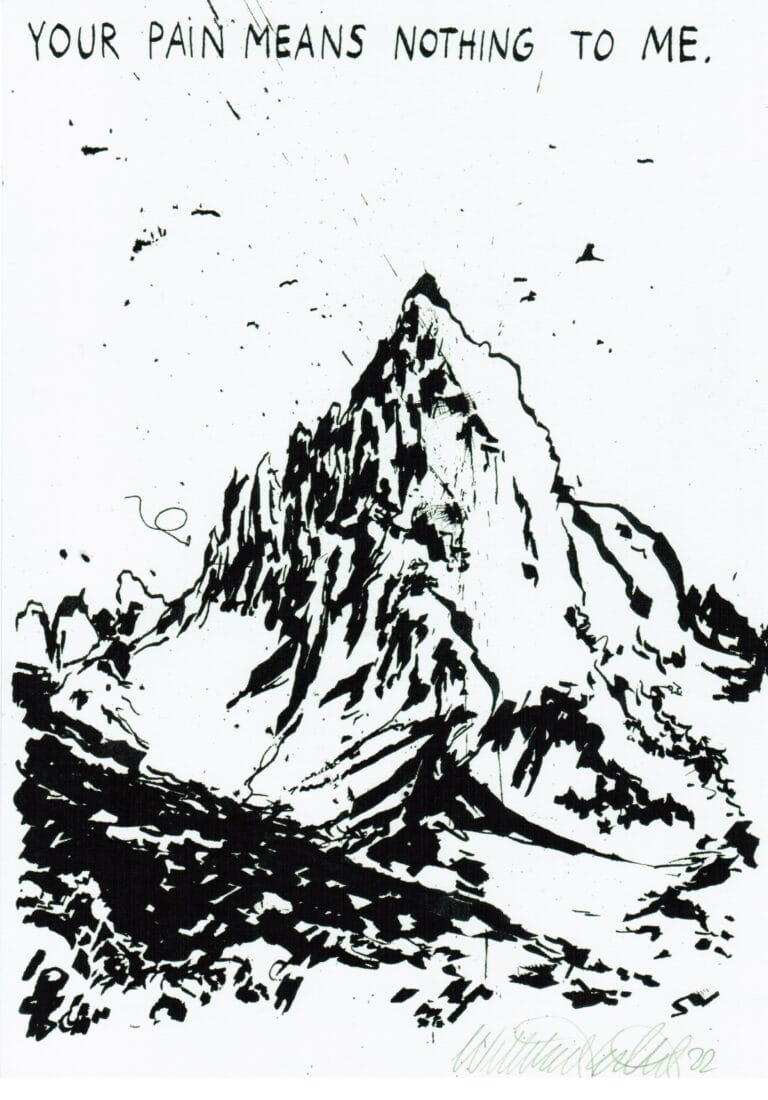
sch/\efer explores a multifocal and multivocal approach in his research, losely based on the book “Exercices in Style” by Raymond Queneau. For this contribution to the Unsafe Journal, an ongoing, fast-paced production of punchlines and slogans, 1-3 liners, sch/\efer brings in his love for grindcore, a subgenre of extreme metal. To name a few:
- The extreme conciseness of old songs by grindcore pioneers Napalm Death (UK) from the mid 80’s: “You Suffer, but why” is with a duration of 1.316 seconds the shortest song ever according to the Guiness Book of World Records.
- The continuous production of writing extremely short pieces of text like Sete Star Sept (JP)
- Using humor, silly worplays and rough language, like the goregrind band Rectal Smegma (NL), Clitgore (RO), Gutalax (CZ)
- Addressing unpleasant topics like Insect Warfare (US), Carcass (UK) or Nasum (SE), Wormrot (SG)
While being is unpleasant to many, Grindcore is pure love.
The punchlines and slogans deal with sch/\efer’s personal frustrations relating to amongst others:
- the so-called anthropocentric and eurocentric view climate change discourse
- the nature-culture binary
- experiences of peoples’ behaviour hiking in the mountains as a “nature retreat” as if this is a mountian’s purpose
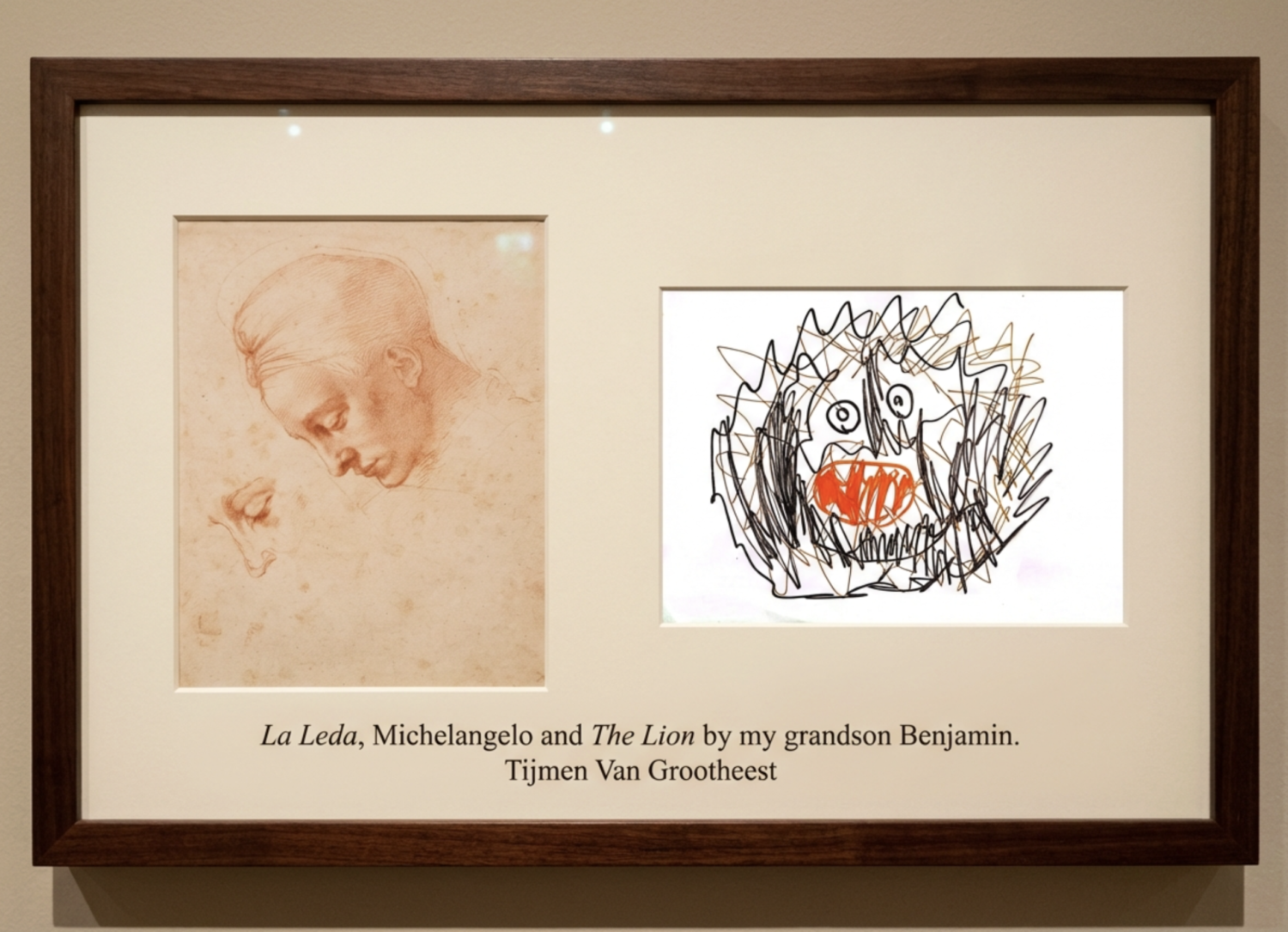
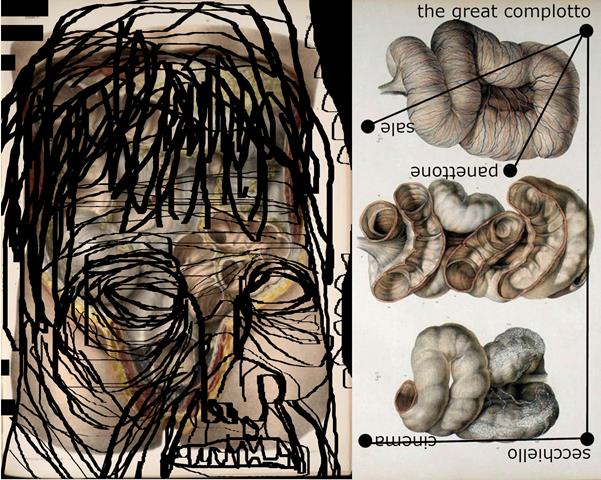
They are told from several perspectives by various agents. The visual outcomes are inspired by the works “Poems” (2005) by Canadian artist Steven Shearer.
The punchlines can be used as grindcore lyrics by any body.
s†ëf/\n sch/\efer is an Amsterdam-based artistic researcher investigating perspectives on death and commemorative ritual in relation to environmental devastation. His work has been internationally exhibited, shared, discussed and developed in close collaborations with more-than-humans, people, institutions from various fields like anthropology, poetry, music, filmmaking, hacking, dance, theatre, green funeral activism.
At this moment he is doing his artistic doctorate at the ATD lectorate of the Academy of theater and Dance in Amsterdam.
Conducted through transdisciplinary practice research operating across art, design and performance, s†ëf/\n’s methodological approaches in his current research include: fieldworks to the ‘dying’ Hochvogel mountain (AUT/DE) and the remains of the ‘dead’ glacier Ok in Iceland; on-site conversations with people visiting the mountain and glacier; interviews with the initiators of the first glacier funeral held in Iceland in 2019; desk research including literature review about the “ontological turn” and “post-humanism” working hands-on with features of Ontologically-Oriented-Design, the pluriverse, climate justice, landslide research, mountain ritual and – performance; practice research through an iterative cycle of experiments and workshares related to field work and readings in the form of miniatures, making wearables, prompts, visualisations, participatory installations, experimental writing, landscape translation and hand-poke self-tattooing.