The War Notes 2
Years ago, during my university days, one of my friends, who studied cinema, made a short documentary film as a final project for his directing class. It wasn’t an ambitious work, just a simple assignment. But one scene from it has remained etched in my mind forever, like many great masterpieces of cinema.
The film was about a day in the life of coal miners in Qom. The mine was extremely remote, both horizontally and vertically, deep and dark. The director asked the workers about their daily routines. They generally didn’t complain, or perhaps I don’t remember, or my friend chose not to turn the film into a lament of the poor.
But what I do remember is that scene. He asked a worker who was drinking tea:
“How many days has it been since you’ve gone home?”
“Five days.”
“How long were you down there?”
“Sixteen hours.”
“How deep?”
“Two hundred and twenty meters.”
Then there was silence, a heavy silence filled with melancholy. The director tried to break it, to shift the mood:
“What do you do when you feel down?”
The worker gave a faint smile, and with a tone full of irony, wit, and quiet depth, simply said:
“Nothing. I smoke a cigarette. That’s it.”
That was all.
I despise poverty, but I despise even more the romanticization of poverty. Turning it into a moral virtue, into a cry for justice. The whining about inequality. Comparing the income of Bill Gates or Zuckerberg to entire populations in Africa, and turning that observation into a moral argument.
There’s a Persian saying:
“If your father isn’t rich, it’s not your fault. But if you’re not rich by forty, it is your fault.”
Even someone who strategically marries into wealth is, in my view, preferable to someone who drifts through life, clinging to illusions about their entitlement and talent, and turns their poverty into something mystical or metaphysical to justify their incompetence.
So I didn’t mention that scene to praise poverty. Nor out of pity for the miners. What made it unique and unforgettable was that the miner had turned poverty into poetry. He didn’t even try to be ironic, poetry was simply in his blood.
Iranians are inherently poetic. Almost every Iranian, at least in the middle class and above, has written a line of poetry, or pinned a poem to their teenage bedroom wall, or memorized verses. Even among the lower classes, among criminals, addicts, you will find poetry. On the metal doors of roadside public toilets, on prison walls, in barracks, in intercity buses, you encounter poetry everywhere.
Don’t misunderstand me. I’m not claiming that this abundance of poetry reflects a high cultural level. No. Like everywhere else in the world, Iran has both cultural richness and poverty. Geniuses and drug dealers. Chefs and TV hosts. But the poetry you find, even in unlikely places, is full of wit, irony, and layered meaning.
Every Iranian has learned, over the years, to live alongside danger. To walk a narrow path, with a valley of destruction on one side and an ever-growing mountain of problems on the other. In Iran, even mountains and valleys are unstable, they too seem to joke with human beings.
Life in Iran, especially in big cities, is a blend of constant hardship and making light of it. What other country do you know where people go to football stadiums while missiles pass overhead? And this paradox is so ingrained that people don’t even boast about their courage. The threat of death is simply part of the daily routine. People have seen so many missiles that instead of running to shelters, they crack jokes.
Taxi drivers are sharp-witted. Mothers are mediators and shields. Students have political opinions. Porters in the old bazaar of Isfahan are historians. And even my use of “all” here is itself poetic exaggeration.
In 2022, a young woman was killed in a police station for not wearing proper hijab. Ninety million people rose up. After that, women removed their headscarves permanently. And the most beautiful aspect of that movement was that hijabi women stood in front of bullets for their unveiled daughters.
Every Iranian family has one extra member: death. And death is no longer a subject of mourning, it has become political. As existence itself has become political. These days, Iranians do not weep for their young dead, they dance.
What other country do you know where people, protesting hunger, storm rice warehouses, not to take the rice home, but to pour it over their heads and dance as it falls to the ground? How many layers of meaning are there in that act?
- You didn’t give it, I took it.
- I could have taken it home, but I refuse to steal or beg.
- I pour it on the ground so you feel ashamed and fix the economy.
- Even hungry, I dance.
- I am inherently dignified, do not starve me.
- You humiliated me, this is my answer.
But beyond all that, I point you to the irony, the humor, the poetry of it.
Iranians are inherently witty. Inherently poetic. Inherently risk-taking, because they have never lived in conditions stable enough to plan ten years ahead.
That’s why Persian colloquial language is full of vague promises and evasive answers:
“Want to travel?” — “Let’s see what happens.”
“What kind of girl do you want to marry?” — “Whoever fate decides.”
“What’s your plan after military service?” — “I don’t know.”
“Can you pay me back in two months?” — “God willing.”
Even the proverb:
“When tomorrow comes, we’ll think about tomorrow”
means that we are always thinking about tomorrow, yet that tomorrow is always slipping away.
This combination, humor, poetry, risk-taking, and aimless living, defines the Iranian.
Though there are many other traits, I leave them for another time.
But I want to end with this: Iranians of recent decades are truly blameless. Truly oppressed. They have suffered beyond their capacity, and have survived through the medicine of humor.
This is not what they deserve. They deserve more.
What nation lives in such a contradiction, between a painful, stagnant present and an uncertain, dangerous future after dictatorship? What country of 90 million people has multiple well-funded opposition media outlets broadcasting from London and America, offering false promises to those trapped inside? What nation does not know whether to live with the wound on its chest (Islamic dictatorship), or submit to surgery by foreign powers like Israel and the United States, a surgery that may lead to death, fragmentation, or the cancer of civil war?
What should an Iranian do?
Love the wound, lest it turn into cancer.
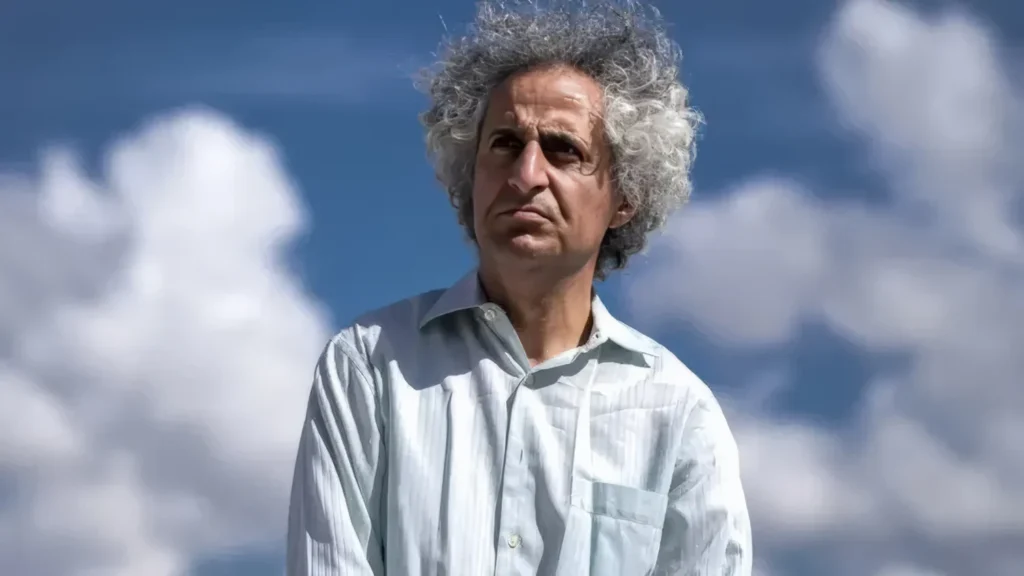
Mohsen Namjoo
March 18
2 nights to the end of nasty Persian year.
Mohsen Namjoo is widely regarded as the most influential Iranian musician of his generation, an artist who has significantly expanded the possibilities of Persian music in the 21st century.
Born in 1976 in Torbat-e Jam, he trained rigorously in the canon of Persian classical music before integrating it with blues, rock, jazz, and experimental vocal techniques. No other Iranian artist has so extensively broadened the emotional and sonic vocabulary of the tradition while remaining rooted in it.
Namjoo has become a prominent voice of artistic engagement for millions. His early underground recordings in Iran circulated hand to hand, building a devoted following long before exile carried him onto international stages. From Europe to North America, his concerts are acts of collective reckoning, where satire, lament, mysticism, and social commentary collide.
We at The Unsafe House had the honor to interview Mohsen Namjoo on The Unsafe Podcast, and specifically discussed his project Minooor, exploring its experimental approach and the depths of sonic exploration.
To many listeners inside and outside Iran, Namjoo is not merely a musician but a defining figure in contemporary Persian culture, demonstrating that tradition can carry experimentation, dissent, and cultural reflection without losing its core identity.
This is the second installment of Mohsen Namjoo’s The War Notes, written exclusively for The Unsafe Journal.